


Quick answer
A depression or anxiety diagnosis does not prevent you from getting life insurance. Applicants with mild, well-managed symptoms controlled by therapy or a single stable medication routinely qualify for Standard rates, and mental-health-friendly carriers will consider better classes for long-stable cases. Severity is what drives pricing: psychiatric hospitalizations, multiple or frequently changing medications, missed work, and any history of suicidal ideation move offers into table ratings. If traditional underwriting rates you heavily, simplified issue and guaranteed issue policies provide a fallback path to coverage.
Like any other health condition, depression and anxiety are looked at differently by different life insurance companies.
Based on the amount of risk they want to insure, life insurance underwriters rate and price these types of conditions according to their own underwriting guidelines.
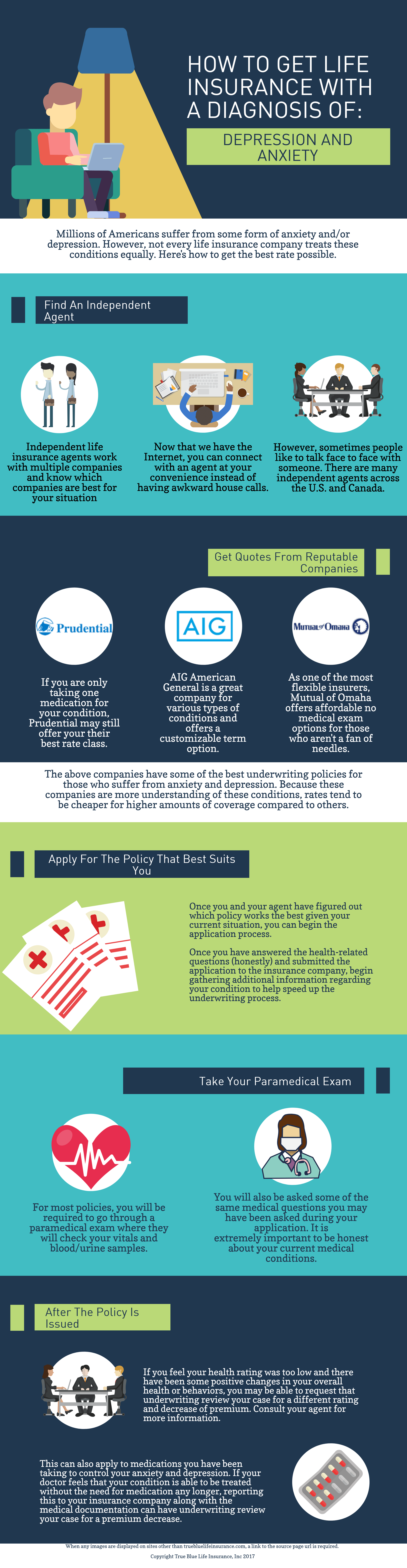
Working with an independent agent will help you get the best policy from the best company available.
It’s not easy to talk about mental illness in our society. Conditions like depression and anxiety are stigmatized and not very well understood; therefore, the access to treatment can be expensive and taxing as can finding affordable life insurance with depression. There are the challenges that are particular to such mental illnesses: the worry, the lack of hope, the physical fatigue.
As if all of this wasn’t difficult enough, trying to plan for the future by getting a life insurance plan can sometimes seem like just another hurdle. Similar to a chronic physical condition or disease, insurers see mental illness as a health risk which can mean more expensive payment plans and more restrictive coverage.
As with any barrier to life insurance approval, every case is different and there are always options. When you begin speaking with an agent and deciding between different plans, it’s always best to understand your situation from the point of view of the insurer. We’ve put together a guide to help you understand more about getting life insurance with depression or anxiety.
Where Do The Definitions Come From?
Clearly, depression and anxiety are not only different from each other, but also extremely variable between people. It can often feel a bit strange to be grouped into the mental illness category when you sit down with an underwriter. Indeed, some questions may come off as intrusive or irrelevant, or the categories may seem arbitrary.
These complaints are common and justified. Still, insurers need a standardized way of understanding these illnesses so that they can offer you the best plan. In general, they draw from definitions of mental conditions from reputable sources like the Center for Disease Control and Prevention (CDC) so that you know that you’re not just being charged for what some insurer deems to be depression.
If you’re concerned about how a particular insurer would classify your condition, the best thing to do is ask for more information. Not only would you be holding the insurer accountable but you would also be acting as an advocate for yourself.
In general, insurers define depression and anxiety, as follows:
- Depression - According to the CDC and a few common diagnostic tools, depression is set of symptoms that are generally characterized by low mood. In order to be considered for clinical depression, you have to have met five or more criteria for at least a two week period, including: sadness, disinterest in things that used to be pleasurable, changes in weight, changes in sleep, thoughts of death or suicide, hopelessness, and others. As you can see, depression is not simply sadness, but rather a period of time characterized by many different difficult experiences that are both mental and physical.
And, of course, not all depression is the same. Someone dealing with Situational Depression because of the recent loss of a loved one is going to have a much different treatment plan and day-to-day life than someone who has been suffering from Major Depressive Disorder for three years. And, while some forms of depression are characterized by temporary episodes of intense feelings, others manifest in long stretches of low mood and fatigue.
- Anxiety - Just as depression can encompass many different experiences, the definition of anxiety as explained by the Anxiety and Depression Association of America is broad. In general, it is understood as a constant or frequent feeling of stress that is disproportionate to real threats. In other words, you may be sitting in a comfortable chair in the safety of your home but your brain is triggering a response as if you were in very real danger. And, similar to depression, this process has effects on both the mind and body.
There are also many types of anxiety, with varying degrees of severity. The most common, Generalized Anxiety Disorder, impacts some 6.8 million Americans and is characterized by feelings of stress and worry that may or may not interfere with daily activities. Others may experience panic attacks or unwanted obsessive thoughts. After traumatic events, some people develop Post Traumatic Stress Disorder, which may manifest in any of the above symptoms as well as nightmares, flashbacks, and mood swings.
Obviously, these definitions don’t encompass everything that mental health challenges like depression and anxiety mean for an individual. A formal assessment by a mental health professional is crucial for creating a more in-depth understanding of what depression or anxiety look like in a person’s life.
What If You’ve Never Been Diagnosed?
Many people suffer from mental illness without ever seeing a professional. The fact that other aspects of your life, like applying for insurance, can become more complicated may seem like another reason to delay treatment. It is important to remember that the costs of living with a mental illness far surpass any benefit you can get from avoiding a formal diagnosis.
When it comes to life insurance, it looks much better on an application to show that you have a diagnosis and that you’ve taken steps to reduce your symptoms than to have the truth come out later. In such cases, you may even be denied because you weren’t honest in the underwriting process.
Going Through The Process
Because life insurance plans for people with anxiety or depression is so complicated, it’s always a good idea to know what your underwriter is actually going to ask you. The common types of questions are:
- What is your diagnosis?
- What was the age of diagnosis?
- What is the degree and severity?
- What was the treatment plan after diagnosis? Did it include medication?
- Has the medication been effective, or have you had to change medications?
- Are you undergoing therapy?
- Have you ever been hospitalized?
- Have you ever had a suicide attempt?
As intrusive as these questions may seem, they are absolutely necessary for an underwriter to determine the level of risk of the applicant. As we mentioned before, it’s crucial that you’re honest and provide as much documentation as possible to give your underwriter a more complete understanding of your situation.
Effects On Plan Options
So what are the actual effects of these conditions on life insurance plans? Well, based on the answers that you’ll be asked by your underwriter, you’ll be placed into one of the following categories:
- Preferred Best/Plus. This rating means that your mental illness is either very mild or extremely well controlled. This may mean that you do not need medication or are at least not taking more than one, or that a mental health professional has deemed therapy unnecessary. If you can prove, in other words, that your diagnosis has not affected your overall health, the insurance company will decide that your depression or anxiety doesn’t pose much of a risk. You will get the best coverage and price with this rating.
- Standard. Under this label, the insurance company has decided that your mental illness is not too severe, but has still affected your health in some way. If you’ve ever been hospitalized, seek regular therapy, or find yourself with more than one prescription, you may fall into this category.
- Table rated. Unfortunately, this is the rating that most people fear, because it means high premiums and possible denial of coverage. People in this category have been severely effected by their mental illness, or may not be taking the appropriate steps to address their depression or anxiety.
What all of this translates to is different plans with different premiums, with the better plans being offered to people with less severe illnesses or more control over their illness. What you will actually end up paying will depend largely on your individual case: some individuals end up paying the same rate as someone who has never had a mental illness. Others will end up paying significantly more.
So, Your Situation Is Not Great
At this point, you may be feeling a bit overwhelmed. It sometimes may seem like it will be impossible to get a life insurance policy, either because you’ve suffered from a severe illness or just haven’t been able to take care of it the way that you’d like. Even if you are having suicidal thoughts you can still get life insurance.
Despite your situation, there are always options. No Exam life insurance policies, for example, allow people who have a limited chance at being approved the opportunity to get plan. It’s important to keep in mind, though, that many of these plans tend to be capped at $250,000 for individuals with a history of mental illness, and may require a higher monthly payment. However, because no exam policies have become more popular in recent past, you may be able to find a great option.
Conclusion
Without a doubt, it can be intimidating to start the process of finding a life insurance policy if you have a history of depression or anxiety. Regardless of your hesitance, it’s always a good idea to talk to an agent and find out your best options. Without asking, you may be missing out on a much better plan than you expected.
It’s important to keep in mind that you are not alone in this process. Depression and anxiety affect millions of Americans, which means that the right life insurance plan is out there for you.
Let Insurancy Help You Get The Life Insurance You Need, Even With A History Of Anxiety Or Depression.
Let a Insurancy agent shop for you to find the policy you need, even with a history of anxiety or depression. We have contacts with underwriters from multiple insurance companies and can send private inquiries to find the best policy. This is a specialized process and an Agent needs to assist you.